

Roofing Case Study
Case Study: Removing a Dangerously Weak Chimney, Then a Second
Home / Case Studies / Unsafe chimney removal
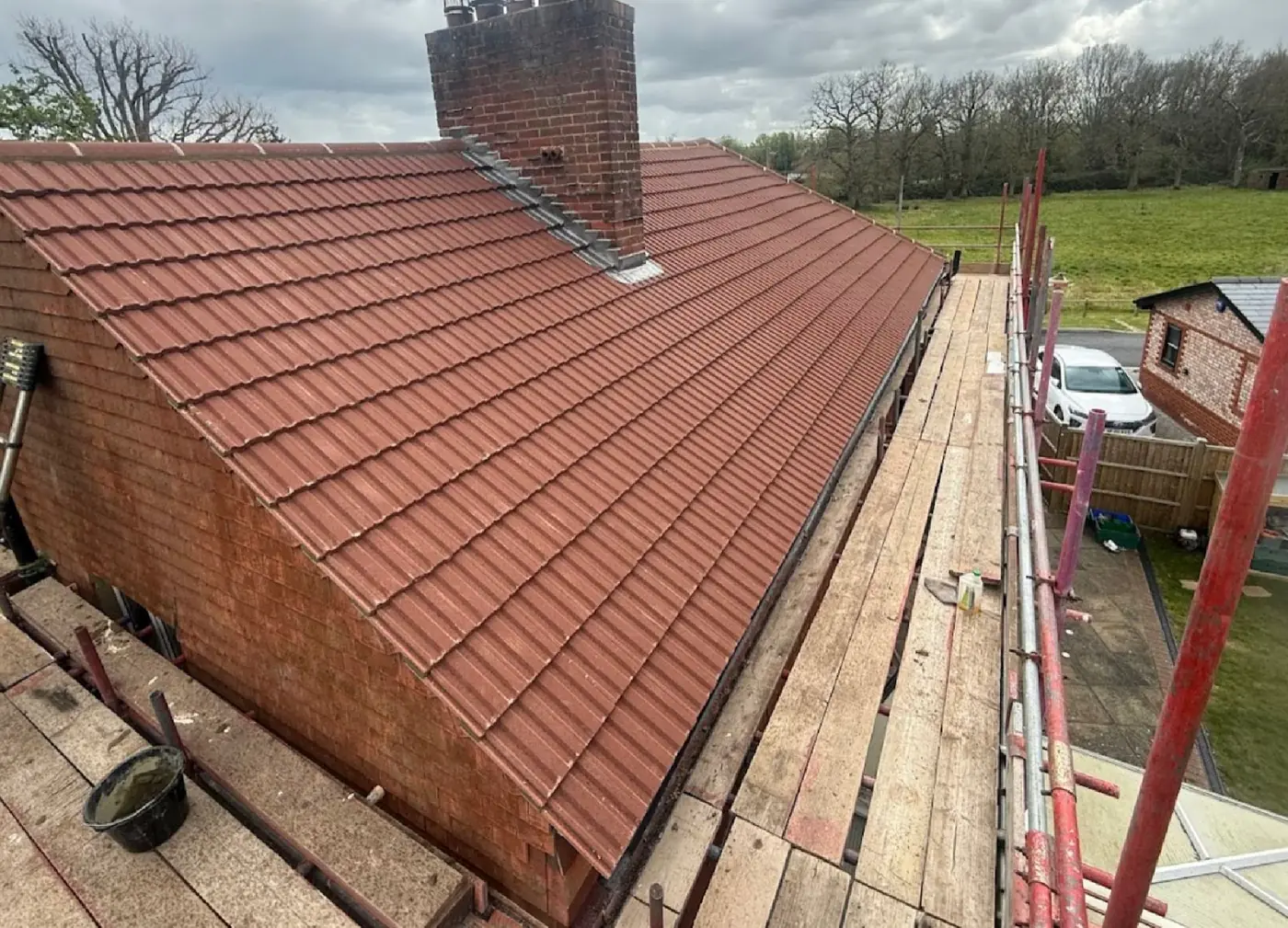
Case study: removing a dangerously weak chimney, then a second while the scaffold was up. How we take down unsafe chimney stacks safely across Surrey. Call 07566 234868 for a free, no-obligation quote.
This case study comes from a Google review by a customer who needed a dangerously weak chimney taken down. They were happy enough with the first removal that they asked us to take down their second chimney while the scaffolding was still up, and they described our prices as spot on. The review doesn't say where the house is, what type of property it is or what state the chimney was in beyond "dangerously weak", so we haven't guessed. Below, we explain how we generally approach removing an unsafe chimney.
The brief
The customer had a chimney they described as dangerously weak, and they wanted it removed. A stack in poor condition is a genuine safety concern: loose bricks, pots or flaunching can fall onto the roof, a path or a neighbour's property, and a cracked or leaning stack can deteriorate quickly in high winds. Removal is often the sensible choice when a chimney is no longer used.
Once the first chimney was down, the customer asked us to remove the second while the scaffold was still in place. It's a practical decision worth considering on any chimney job: scaffolding is a significant part of the cost, so dealing with both stacks under one setup avoids paying for access twice.
Why weak chimneys need careful handling
Chimney stacks take more weather than any other part of a house. Rain, frost and wind work on the brickwork and mortar for decades, and on older homes, flue gases from coal and gas fires can cause sulphate attack, which expands the mortar on one side of the stack and makes it lean. By the time a stack looks weak, the joints may be holding very little together.
That makes removal a job for careful hands, not a sledgehammer. A weak stack has to be taken down from the top, a few bricks at a time, so nothing falls through the roof or off the scaffold. Other questions need answering before work starts: whether any flue is still in use, whether the stack is shared with a neighbour, and what happens to the chimney breast left inside.
How we approach a job like this
Assess the stack and flues
We'd start by inspecting the chimney closely and checking what it serves. Any flue still connected to a working fire, boiler or stove must be properly decommissioned first, which may need a Gas Safe or HETAS registered engineer. We'd also check whether the stack is shared with next door, because work to a party structure usually falls under the Party Wall etc. Act 1996, and notice may need serving.
Scaffold with proper protection
Chimney removal needs a safe working platform around the stack, with guard rails and toe boards. For an unsafe chimney, we'd plan the scaffold so nobody has to lean on the stack or work beneath it. Debris needs a safe route down too, such as a chute or bagged lifts, so paths, gardens and neighbouring property stay clear of falling material throughout the job.
Dismantle by hand from the top
The pots and flaunching come off first, then the stack is taken down by hand, course by course, with bricks lowered rather than thrown. Taking a weak stack down slowly and in a controlled way is the safe method, even when the brickwork would come away easily. We work down to the agreed level, which is usually below the roofline so the roof can be covered over.
Deal with the chimney breast
Removing the stack above the roof usually leaves the chimney breast inside the house in place. That's fine, but the old flue needs ventilating, typically with a vent in the breast at the bottom and a route for air out at the top, so condensation doesn't cause damp patches. Taking out breasts inside the house is separate structural work that needs building regulations approval and proper support.
Rebuild the roof over the opening
With the stack gone, the hole in the roof is framed with new timbers fixed to the existing rafters. Membrane and battens are run across to tie in with the surrounding roof, and the gap is tiled or slated to match. The old chimney flashings come out, and where the stack sat against a wall or party line, new lead or other weathering details are fitted.
Clear up and final checks
Before the scaffold is taken down, we'd check the new section of roof, the junctions around it and the gutters, which collect a lot of mortar and grit during chimney work. Debris is cleared from site. If there's another chimney that may need attention in future, that's the time to look at it, because putting scaffolding back up later is often a significant cost in itself.
What goes into making good after chimney removal
Most of the materials in a chimney removal go into closing the roof properly afterwards. New treated timbers frame the opening and support the infill, and a breathable membrane is lapped into the existing underlay so water can't track in at the joins. The battens are set to the same gauge as the rest of the roof, so the new tiles or slates line up with the old.
Matching the covering is the visible part. Depending on the roof, that means reclaimed tiles or slates, or new ones sourced to match the existing profile and colour as closely as possible. Where the stack sat at a party wall or abutment, lead weathering is fitted following Lead Sheet Association guidance. If a stack is reduced rather than removed completely, the top is capped and ventilated to keep rain out of the flue.
Examples of this kind of work

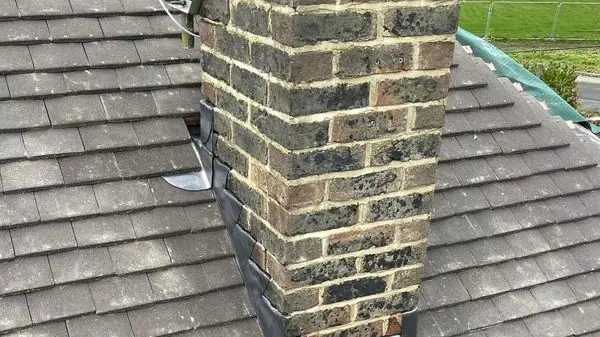
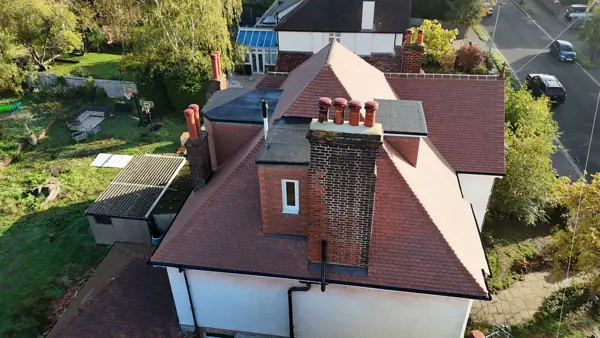
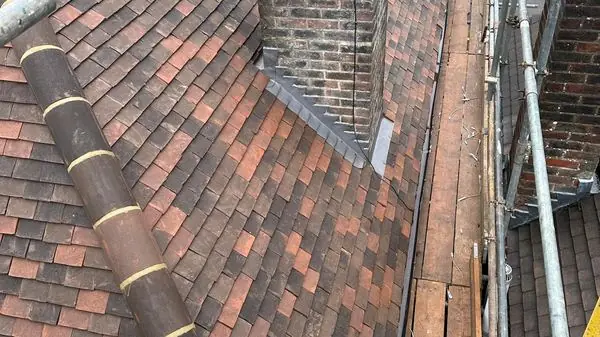
“Lee and the crew worked quickly and efficiently to remove a dangerously weak chimney. The work was so well executed I asked him and the guys to come back and take down the other one while the scaffolding was still in place. Lee's prices were spot on too.”
Signs your chimney may need the same work
- The chimney stack is visibly leaning or bowed
- Cracked, crumbling or missing mortar joints
- Spalling or loose bricks, or bits of brick and mortar in the gutters
- Cracked flaunching or loose chimney pots
- Damp patches on chimney breasts or ceilings next to the stack
- A chimney that is no longer used but still needs regular repairs
Not sure? Ask us for a free, no-obligation look or call 07566 234868.
Questions about this kind of job
Is it better to repair or remove a weak chimney?
If the chimney is still in use, or important to the character of the house, rebuilding or repairing the stack is usually right. If it's redundant and in poor condition, removal can work out cheaper long term and ends the maintenance. We'll look at the condition, the house and how you use it, and tell you honestly which makes more sense.
Do I need permission to remove a chimney?
Removing a stack above the roofline often doesn't need planning permission, but listed buildings and conservation areas are different. If the chimney is shared with a neighbour, the Party Wall etc. Act 1996 is likely to apply, and removing chimney breasts inside needs building regulations approval. Check current rules with your council before work starts.
What happens to the fireplace and chimney breast?
If only the stack above the roof is removed, the chimney breast and fireplaces stay as they are. The flue should be ventilated so moisture doesn't build up inside it, and any open fireplace should be closed off with a vent, because it can no longer be used safely. Removing the breasts themselves is separate structural work.
Why remove both chimneys at once?
Scaffolding is a significant part of the cost of chimney work, so if a second stack is in similar condition, dealing with both while the scaffold is up usually saves money and disruption. That's what the customer in this case chose to do. Our roof cost estimator gives a starting point if you're planning chimney or roof work.
Related services and guides
About this case study: the job details here come from the customer's own Google review, which you can read in full on our reviews page. To protect our customers' privacy we don't publish addresses. The sections on how we approach the work describe how we handle this type of job, and the photos are examples of the same kind of work from our project gallery.
